
|
Quick Picks
|
Fuel prices in Europe have spent 2026 swinging hard and ending high. As of early June 2026, the EU-27 average sits at roughly €1.79 per litre for petrol and €1.80 for diesel — and earlier in the year, petrol jumped from about €1.64 to €1.87 in five weeks while diesel climbed from €1.59 to €2.08. For anyone driving a petrol or diesel car, that volatility lands straight on the monthly budget.
Fuel as a recurring, tax-heavy cost in the EU
In Europe, the pump price is mostly taxed. As of mid-March 2026, taxes made up about 52% of the petrol price and roughly 45% of the diesel price across the bloc. That structure is why the same litre of fuel can cost €1.34 in Malta and €2.39 in Denmark — the wholesale cost is broadly similar across Europe’s integrated refining market, but national excise duty and VAT pull the final price in very different directions. For a driver, the practical takeaway is simple: a large, fixed slice of every fill-up is tax you cannot drive around.
Oil price swings landing straight at the pump
Crude is priced globally and in US dollars, so events far from Europe move the number on the forecourt sign. In 2026, the EU petrol average bottomed at €1.59/L just before Christmas 2025, then climbed steadily to a €1.90/L peak on 25 May 2026 — a near 20% peak-to-trough swing in a single year. The spring spike pushed petrol up about 14% and diesel about 30% in roughly five weeks, and a weaker euro against the dollar adds further pressure, because oil costs more in euros even when the dollar price holds flat. None of this is under a driver’s control.
Why an Efficient Engine Still Leaves You Exposed?
A frugal modern engine helps, but it doesn’t remove the exposure — it only shrinks it. As long as the car burns liquid fuel, every kilometre is tied to a price that taxation keeps high and geopolitics keeps volatile. You can drive gently and still watch your monthly fuel bill jump 14% because of an event on another continent. If your budget keeps absorbing shocks you have no control over, you probably deserve a better option — one that steps away from that fuel treadmill.
That is the case for switching to an electric vehicle, and GAC’s European range offers two strong ways to do that. Both the AION V and the AION UT are fully electric vehicles that replace the fuel bill with electricity which is cheaper per kilometre and far more stable in price. The question is which one fits which driver.
Electric Vehicles for Each Driver — and a Spec Comparison
- Growing family that wants one do-everything electric vehicle → AION V
- City driver who wants the most accessible entry electric vehicle → AION UT
Specification overview
|
Specification |
AION V |
AION UT |
|
Body type |
Mid-size electric SUV |
Compact electric hatchback |
|
Battery |
75.26 kWh LFP |
60 kWh LFP |
|
Range |
510 km (WLTP) |
up to 430 km (WLTP) |
|
Motor power |
up to 150 kW (204 hp) |
150 kW (204 hp) |
|
Length |
4,605 mm |
~4,270 mm |
|
Wheelbase |
2,775 mm |
2,750 mm |
|
Seats |
5 |
5 |
|
DC fast charge |
10–80% in ~24 min |
30–80% in ~34 min |
|
Safety |
5-star Euro NCAP (2025) |
7 airbags((incl. centre airbag), 360° camera, L2 ADAS) |
AION V — Swapping a Family’s Fuel Bill for Electricity
The AION V is GAC’s globally developed compact electric SUV, built at the Magna Steyr plant in Graz — a respected Austrian contract factory with a long track record of assembling premium European vehicles. For a European family, the appeal is straightforward: the space and range of a mid-size SUV, with the running cost of an EV.
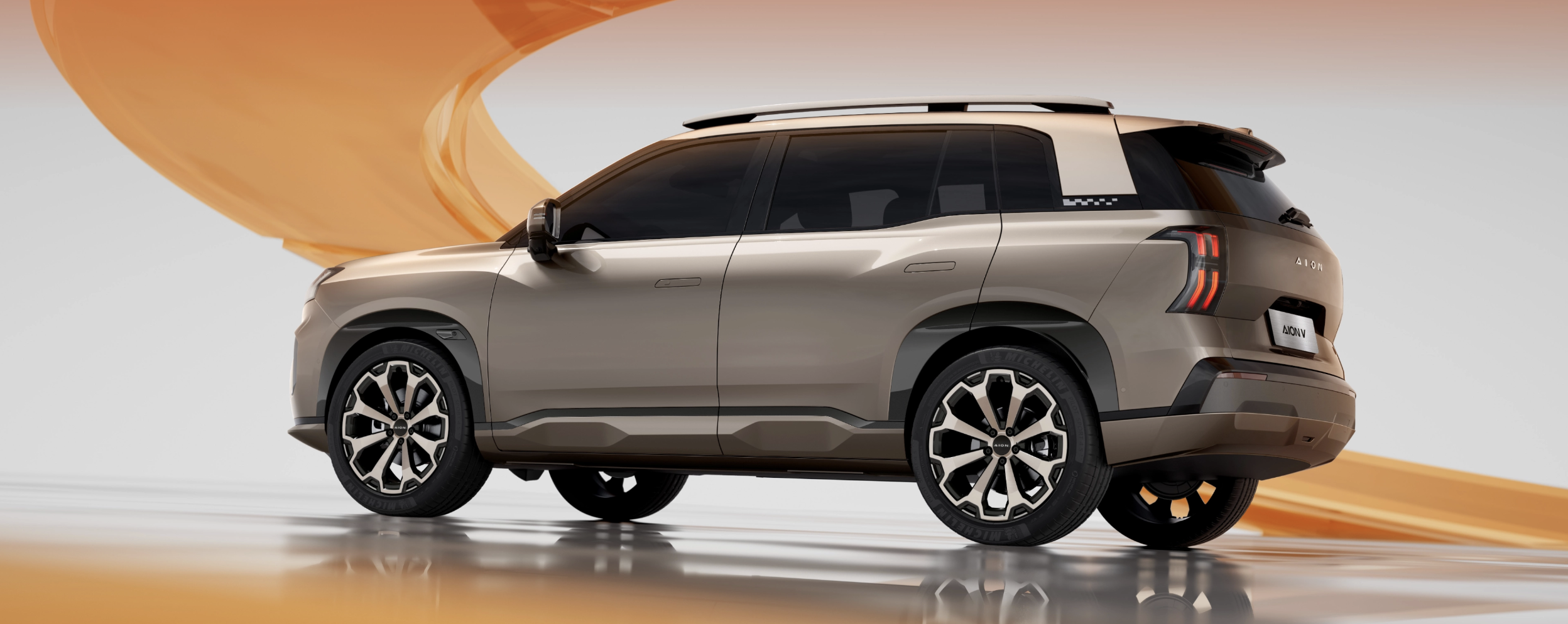
Q: How far can the AION V go on one charge?
About 510 km on the WLTP cycle, from a 75.26 kWh LFP battery. That comfortably covers a full work week of commuting plus a weekend trip without planning around chargers. One independent UK road test recorded around 3.6 mi/kWh in real-world driving — a solid efficiency result for a car of this size.
Q: How much does it cost to “fill up” the AION V?
You don’t fill up — you charge. Because electricity per kilometre undercuts petrol and diesel, and its price is far more stable than oil, the AION V removes the volatile fuel line from the household budget. A roughly 75 kWh charge at home replaces the equivalent of a full tank, at a fraction of the per-kilometre cost.
Q: Is the AION V practical for a family?
Yes. At 4,605 mm long with a 2,775 mm wheelbase, the AION V sits firmly in the popular mid-size electric SUV class, and the dedicated electric platform means a flat floor and genuinely roomy rear seats. It carries a five-star 2025 Euro NCAP rating.
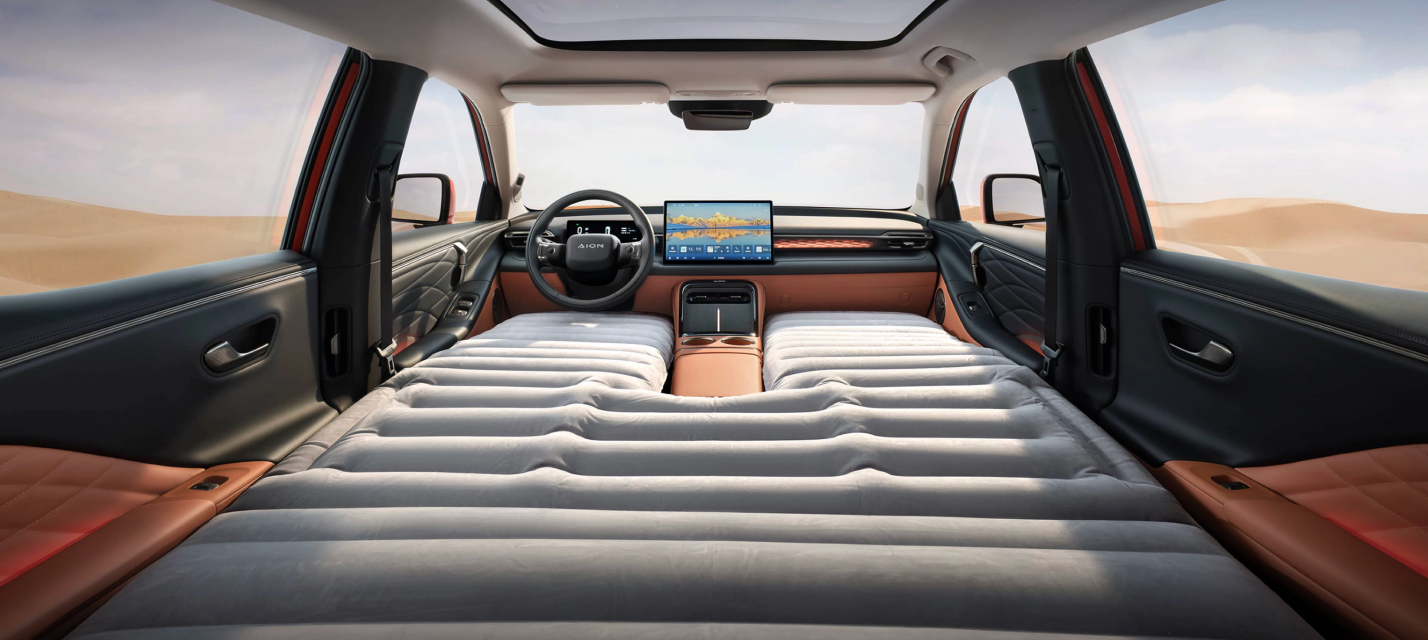
Q: How long does charging the AION V take?
DC fast charging takes it from 10% to 80% in about 24 minutes — enough for a coffee stop on a longer journey. At home, on AC, it charges overnight.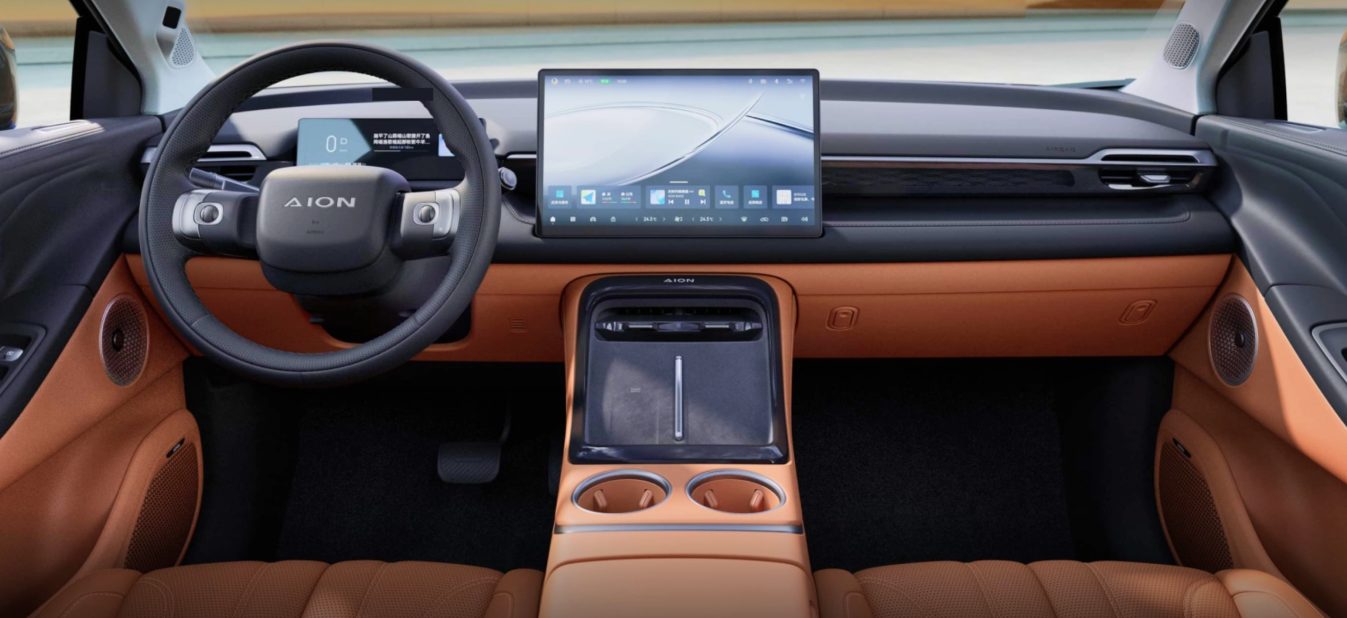
AION UT — The Most Accessible Route Into Oil-Free Driving
The AION UT is GAC’s compact electric hatchback: designed in Milan, assembled in Graz, and aimed squarely at the European C-segment of popular city EVs. It is the most accessible way into this line-up.
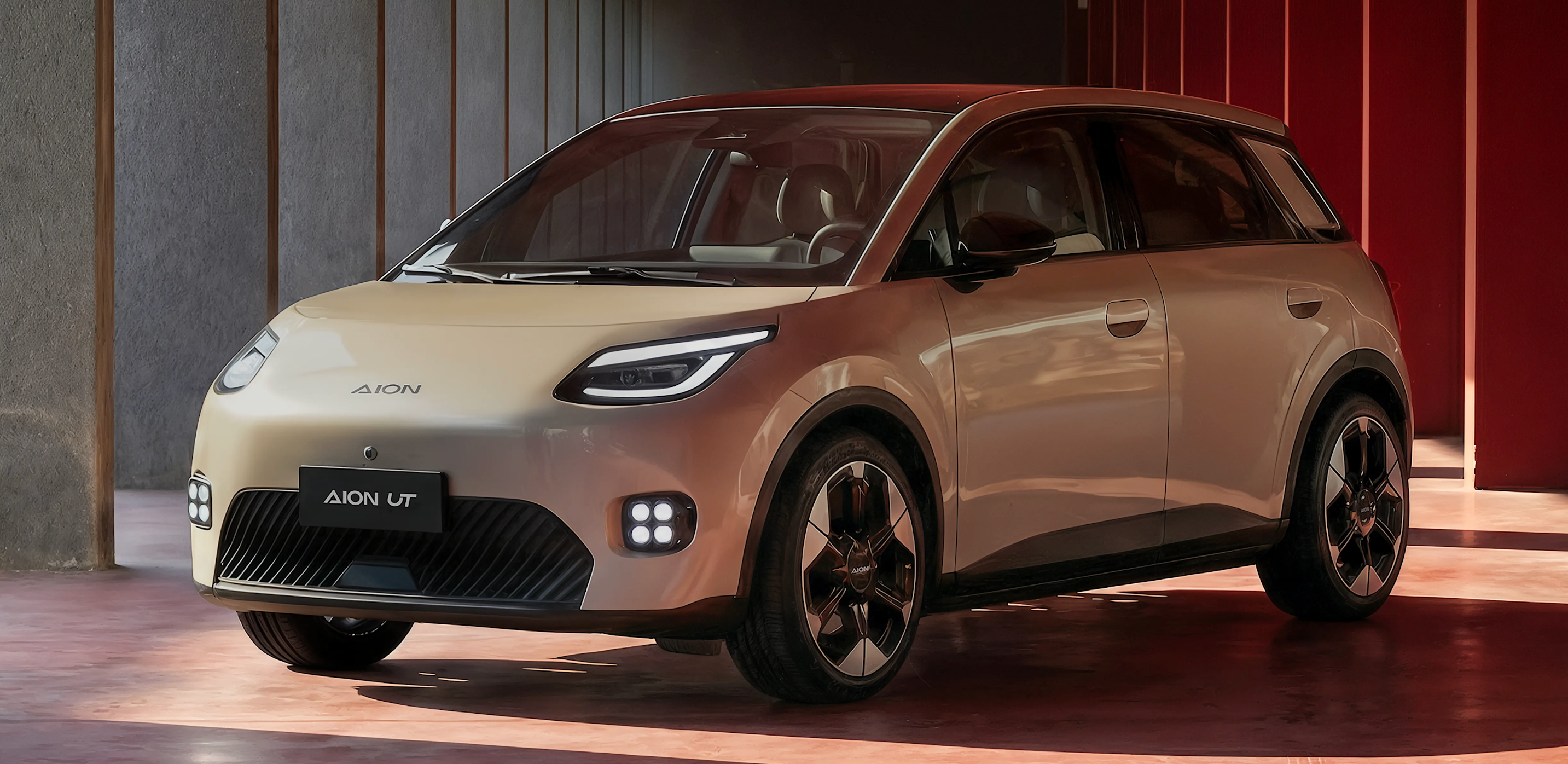
Q: What makes the AION UT stand out in the city EV class?
Packaging and value. At about 4.27 m long with a 2.75 m wheelbase it keeps a compact, city-friendly footprint, yet it offers a surprisingly roomy cabin and up to 1,600 litres of cargo space with the seats folded — small enough for the city, spacious enough for the weekend.
Q: What is the AION UT’s range and battery?
A 60 kWh LFP battery delivers up to 430 km WLTP, with a claimed energy consumption of around 16.4 kWh/100 km. Real-world mixed driving lands closer to 400 km, and pure city driving can exceed the headline figure — more than enough for daily urban and suburban use.
Q: How is the AION UT equipped?
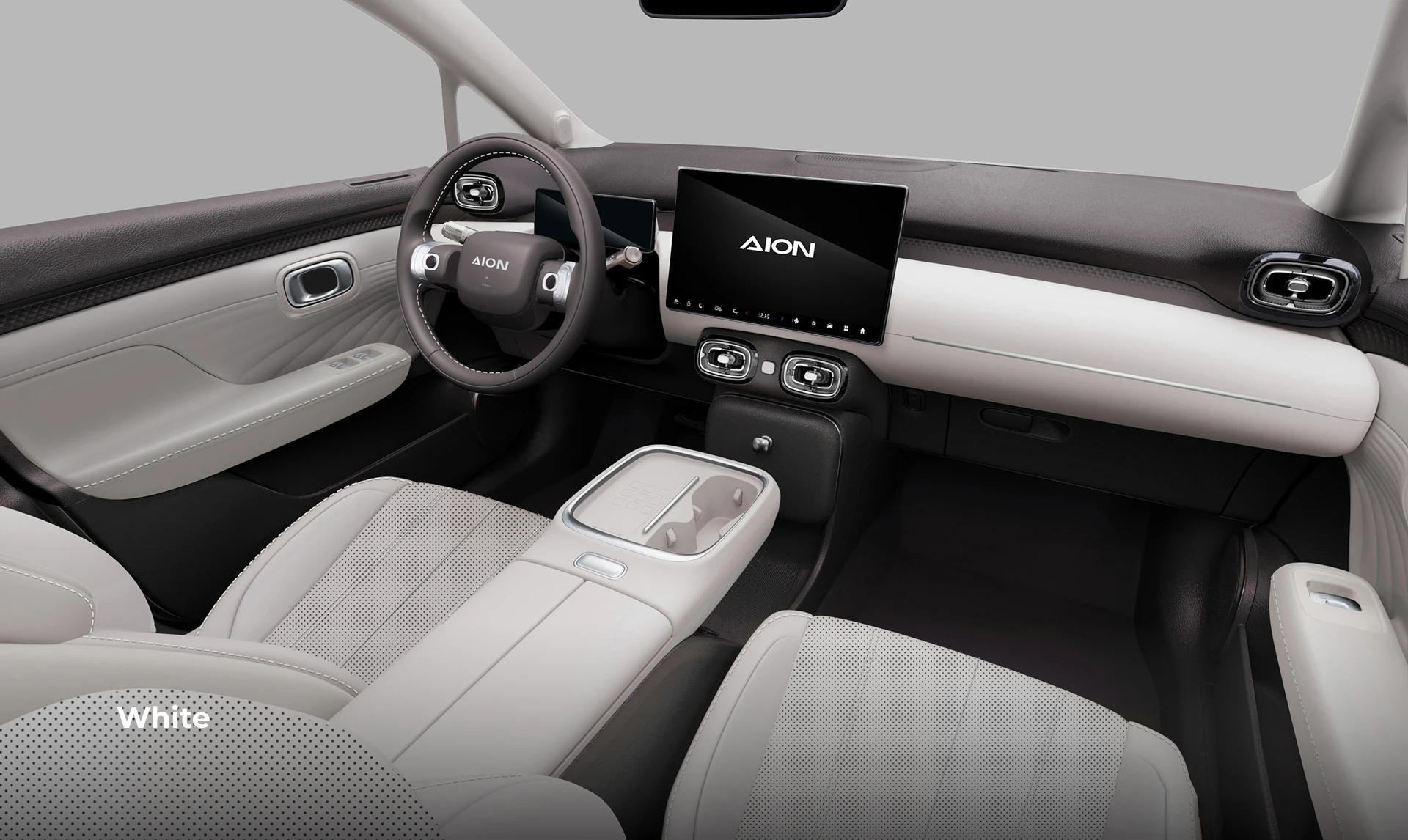
Generously: a large central touchscreen with wireless Apple CarPlay and Android Auto, an 8.8-inch driver display, seven airbags including a centre airbag, a 360-degree camera, and vehicle-to-load (V2L) capability so the car can power external devices.
Q: How fast does the AION UT charge?
DC fast charging takes 10% to 80% in around 34 minutes, and an 11 kW three-phase AC connection delivers a full charge in under about 5.5 hours.
Q: What about the AION UT warranty?
A 24-month/30,000 km warranty — among the strongest packages in the segment.
How to pick the right SUV for European Driver?
Picking the right one is less about the spec sheet and more about matching the car to how you actually drive.
Segment and size needed. Need a compact car for tight city streets and parking? The AION UT. Need genuine family-SUV space with room to grow? The AION V.
Daily range. A city commuter rarely troubles even the UT’s 430 km. Frequent long-distance drivers benefit from the AION V’s ~510 km and faster 24-minute top-up. Match the range to your real weekly distance, not to the biggest number.
Charging access. Home or workplace charging makes both models cheap and convenient to run. If you rely on public charging, weigh charge speed: the AION V’s 24-minute 10–80% is quicker than the UT’s ~34 minutes.
What matters most: Match the model to your real use. The size and range differ — but both already do the one thing this guide is about: they help take the volatile, tax-heavy fuel bill out of your monthly budget.
Conclusion
European fuel prices in 2026 have been both high and unpredictable — an EU average near €1.79/L for petrol, swings of nearly 20% across the year, and more than half of every petrol euro going to tax. An efficient engine softens that exposure but never removes it. Going electric does.
GAC’s two European electric vehicles each end the fuel bill in a different package. The AION V is the all-round family SUV — roomy, 510 km WLTP range, five-star safety, and built in Austria. The AION UT is an accessible city pick — up to 430 km, well-equipped, and the easiest way in.
Whichever fits your space needs and your daily distance, both deliver the same core advantage: more stable, lower running costs with far less exposure to the next oil-price shock.
Ready to step off the fuel treadmill? Visit your nearest GAC showroom to see the AION V and AION UT in person, or book an online test drive at your convenience — our team is happy to walk you through the model that best fits your driving.
Reference
[1] European Commission. (2026). Weekly Oil Bulletin: Consumer prices of petroleum products. Directorate-General for Energy. Retrieved June 2026, from https://energy.ec.europa.eu/data-and-analysis/weekly-oil-bulletin_en
[2] European Commission. (2026). Weekly Oil Bulletin: Taxation share of fuel prices in the EU. Directorate-General for Energy. Retrieved June 2026, from https://energy.ec.europa.eu/data-and-analysis/weekly-oil-bulletin_en
[3] GAC Europe. (2026). AION V: Specifications and technical data. Retrieved June 2026, from https://www.gac-motor.com/
[4] GAC Europe. (2026). AION UT: Specifications and technical data. Retrieved June 2026, from https://www.gac-motor.com/
[5] Euro NCAP. (2025). AION V safety assessment and crash test rating. European New Car Assessment Programme. Retrieved June 2026, from https://www.euroncap.com/
[6] Magna Steyr. (2026). Contract manufacturing: Graz vehicle assembly. Retrieved June 2026, from https://www.magna.com/company/company-information/magna-groups/magna-steyr